The name Cala Figuera creates a massive routing problem for visitors on Mallorca every summer. Standard GPS applications regularly send drivers to a remote pebble beach on the northern Cap de Formentor peninsula in Pollença. The true destination is the historic working port of Cala Figuera in the southeastern municipality of Santanyí. This is an active maritime village governed by the Santanyí Town Hall. The aesthetic here relies entirely on rocky cliffs and deep blue water. There is no sandy beach. The absence of sand historically protected this coastal pocket from massive high-rise hotel developments.
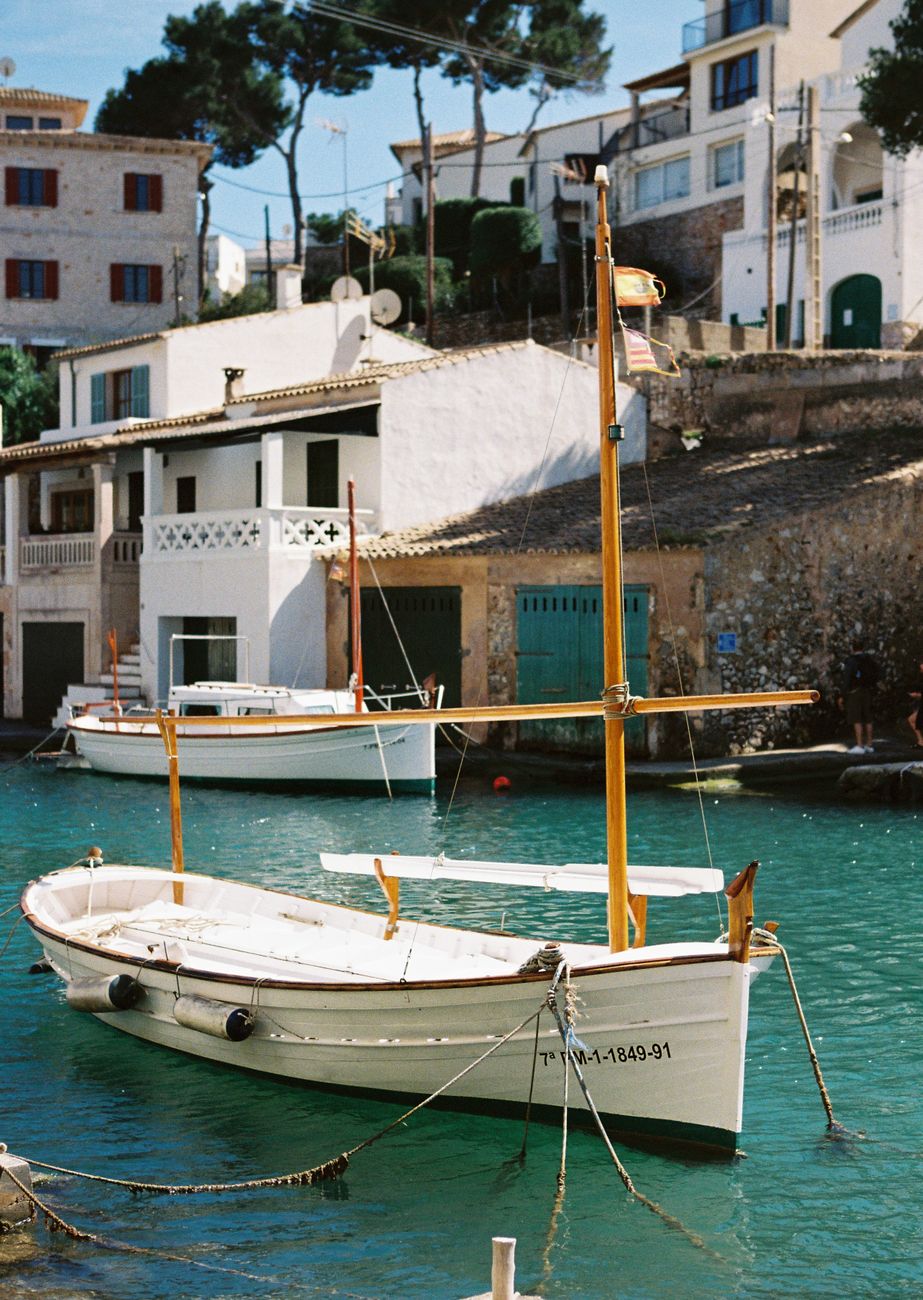
The physical layout of the port dictates the entire rhythm of local life. The main channel cuts deep into the limestone coastline and splits into two distinct arms. The left branch is Caló d'en Busques. The right branch is Caló d'en Boira. These two inlets form a protected harbor for the local fishing fleet. Traditional whitewashed fisherman houses line the edges of the sheer cliffs. Bright green shutters frame the windows of these homes, matching the deep tones of the Mediterranean pine trees above. Narrow clifftop stairs descend directly from the residential streets down to the water level.
Down at the water level, the pedestrian path runs directly over the traditional slipways known as escars. These stone ramps are cut directly into the rock. Residents pull their small wooden boats out of the water along these inclines. The stone steps and boat ramps are covered in green algae and get extremely slippery. Sturdy water shoes are a strict requirement for anyone walking the lower paths. This is the exact stone slipway the local fishermen tie their wooden boats up to.
The local fleet departs from Caló d'en Busques around 6:00 AM every morning. The boats return between 4:30 PM and 6:00 PM to unload their daily catch. The old physical fish market (Lonja) no longer operates for retail public sales. Diners looking for fresh local seafood must rely on the certified restaurants overlooking the harbor, such as Bistro Bar Bonavista or Restaurante s'Ona Beach.
The Santanyí Town Hall (Ajuntament de Santanyí) manages the infrastructure of Port de Cala Figuera. The area has a long maritime history tied to coastal defense and local trade.
Reaching the harbor requires specific logistical planning. Public transportation operates under the regional Transports de les Illes Balears (TIB) network. The village connects directly to the surrounding transit network via Route 516. Fares range between €4.00 (~$4.36) and €6.00 (~$6.54) for single card transactions, depending on the zone of embarkation. The direct journey from Campos takes approximately 25 to 35 minutes depending on coastal traffic. Departures from the Cala Figuera station run at approximately three-hour intervals during peak summer periods.
Ride-hailing platforms such as Uber are concentrated near Palma and the airport. Drivers are generally unavailable for localized trips within the southeastern rural coves. The Mallorcab App is the officially recommended smartphone tool for licensed local taxis.
Visitors driving rental cars will find unrestricted, free street parking along the main entrance avenues and a spacious public car park at the harbor entrance. During the peak summer months of July and August, central spaces fill completely by late morning. Drivers should plan to arrive before 10:00 AM to secure early parking acccess. The historic core descends steeply toward private boat docks, and these paths lack vehicle street access. Drivers must park on the main street level before walking down the stairs.
While entering the geographic area is free, all overnight visitors to the Balearic Islands are legally subject to the Sustainable Tourism Tax, colloquially referred to as the Ecotasa. Accommodation hosts collect this tax upon arrival. The revenue is reinvested directly into local environmental protection and historical restoration projects across the islands. A 50% reduction applies for stays lasting nine or more consecutive nights. Children under 16 years of age are completely exempt.
June brings highly stable Mediterranean weather, with daily temperatures ranging between 24°C and 28°C. July and August see temperatures frequently exceed 30°C. By November, a majority of hotels, seasonal restaurants, and coastal activities in Cala Figuera close entirely for the winter period. The off-season lasts through April.
The cultural calendar peaks in mid-July with the Festes de la Mare de Déu del Carme. This maritime celebration honors teh patron saint of fishermen. The Santanyí Artisan Market runs every Wednesday and Saturday in the municipal center, while a localized summer market takes place on Calle Sant Pere in Cala Figuera every Monday from June to September.
The optimal time to visit Cala Figuera is between 8:00 AM and 10:00 AM. During these early hours, travelers experience the harbor in peaceful quiet before the tour buses arrive. The flat morning water creates perfect reflection views of the whitewashed facades along the Y-shaped inlet. The late-afternoon sun provides excellent lighting for clifftop photography as the boats return to the escars.
Many visitors stay exclusively on the lower harbor paths and miss the surrounding natural landmarks. The clifftop road leading to the Torre d'en Beu watchtower offers unobstructed views of the open sea. Roughly four kilometers away from the Santanyí center, a well-marked walking path starts near Cala Santanyí and leads to Es Pontàs. This massive natural stone bridge rises directly out of the sea and serves as a highly recommended photography location.
For travelers seeking a quiet coastal escape near the popular beaches of Mondragó Natural Park, Caló des Savinar is a secluded rocky inlet nearby. It is excellent for snorkeling and diving away from the heavy summer crowds. The port of Cala Figuera remains a traditional working space, demanding respect for the daily routines of the local fleet.